Overview
The feeder is part of the complete component-handling chain. Its role is to receive the customer’s actual packaging condition and present the component for the approved pickup or insertion process. Service type: Odd-form component feeder engineering evaluation and integration.
The categories below are possible engineering routes, not a list of confirmed standard capabilities. Every component and packaging combination requires engineering evaluation.
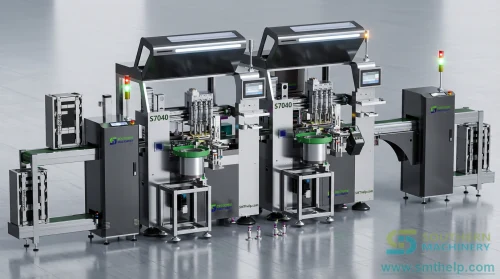
Standard feeding route
A standard feeding route may be considered when the incoming packaging, component geometry, orientation and presentation method are compatible with an available feeder concept. The review must confirm the part number, packaging format, pitch or spacing, orientation, pickup datum, lead condition and interface with the end tool.
The word “standard” describes the route being evaluated; it does not confirm that an unreviewed component is supported.
Bowl or flexible feeding route
Bowl or flexible feeding may be considered for selected loose or bulk components. Engineering must evaluate whether the components can be separated, oriented and presented without unacceptable tangling, overlap, surface damage, lead deformation or unstable recirculation. The required presentation method and its interface with the end tool remain project-specific.
This route is not confirmed until representative components, the incoming bulk condition and the target process have been reviewed.
Customized feeding route
Customized feeding may be evaluated when the component uses non-standard packaging, has special orientation needs, or cannot be presented reliably by an available route. The evaluation can include the transfer path, singulation, orientation, presentation point, controls interface and the relationship with insertion tooling.
A customized route is an engineering proposal subject to samples and testing. It is not a promise of feasibility or production performance.
Feeder, end tool and machine interface
Stable presentation alone is not enough. The feeder outlet, pickup position, end tool, insertion direction, machine access and PCB support must work together. Engineering therefore reviews the complete path from incoming packaging to the agreed insertion result.
Potential risks include inconsistent orientation, mixed or damaged parts, lead variation, restricted gripping surfaces, component movement during transfer and limited clearance around the PCB insertion area.
Evaluation path
- Confirm the component identity and actual packaging condition.
- Review possible feeding routes and identify risks that require trials.
- Inspect representative samples and define the presentation requirement.
- Match the feeder interface with the end tool, machine sequence and PCB conditions.
- Agree the trial method and acceptance criteria before confirming the solution scope.
Information required for evaluation
Please provide:
- PCB photo;
- component photo;
- part number or list;
- packaging details;
- current process;
- target capacity;
- pain point;
- sample availability; and
- timeline.
Photos can support an initial discussion, but final feasibility and configuration depend on the actual component, packaging, PCB information, samples and agreed acceptance criteria.